A Genre of Gems and Garbage
On the inevitable dissolution of our current romantasy landscape.

We’ve all seen the recommendations on our BookTok feeds: romantasy by spice level, romantasy by trope, romantasy by the color of the main character’s hair (silver, red, or mysteriously blonde). I’m not here to bash the genre, which takes the worldbuilding of traditional fantasy and combines it with the easy prose and fast plots of contemporary romance—in fact, of the 92 books I have read this year, probably 70 of them were romantasy novels. I promise that I read other genres, too, but fantasy has always been my home base, and sometimes you need a little warfare with your slice of life romance. Since A Court of Thorns and Roses came out during my freshman year of high school, I’ve been hooked. I read A Court of Mist and Fury upwards of ten times in my junior year alone, waiting anxiously for A Court of Wings and Ruin to arrive. Sarah J. Maas has her flaws, not least of which being her inability to write a main character that doesn’t piss me off (Aelin. I mean Aelin), but we cannot deny that her books have defined this era of popular fantasy.
This happens, when a book takes off—as a kid, I read The Hunger Games and then Divergent, and then Uglies, and then Matched, and then Unwind, and then I got into some truly deep cuts. You couldn’t throw a rock in my childhood library without hitting at least four dystopian fiction novels with a female main character and her broody male compatriot. Now, the twentysomethings of the internet are encountering the same problem. What do you do when you’ve already read the best that a genre has to offer? In my case, you read everything else.
I’ve read the bad (From Blood and Ash by Jennifer L. Armentrout), the even more bad (Zodiac Academy by Caroline Peckham and Suzanne Valentine), and the worst (Kingdom of Villains by Ella Fields). However, I’ve grown fatigued with fantasy’s most recent offerings. Some of them are true diamonds, of course. The Priory of the Orange Tree by Samantha Shannon comes to mind, or a cozy T. Kingfisher offering. But more and more novels are, well, garbage.
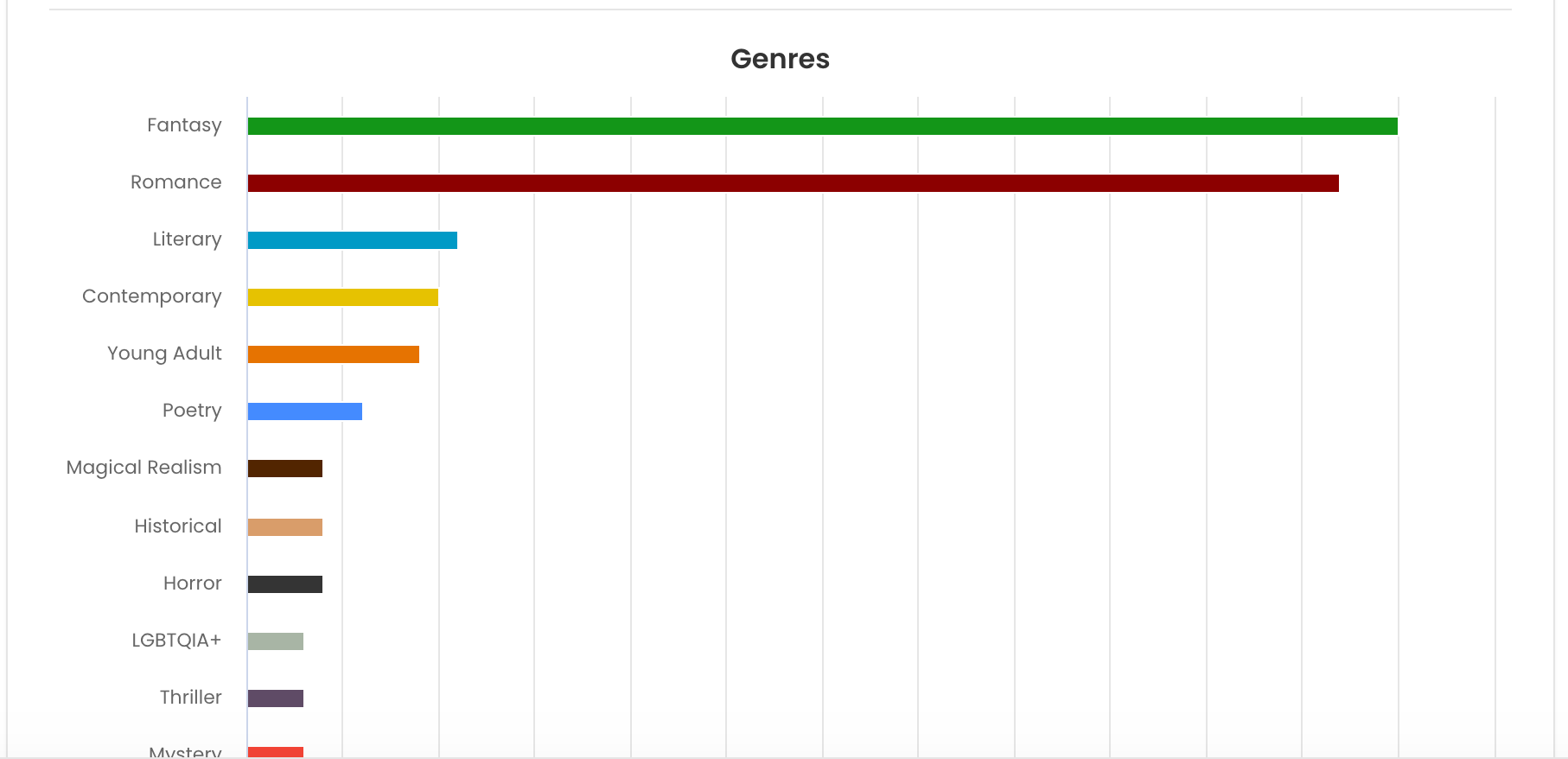
The recent trending romantasy novels feature an unhealthy indulgence in rape fantasies or problematic relationship dynamics, seemingly without understanding how their unconditional romanticization lends power to these narratives. I use the word “unconditional” purposefully; I think exploring the relationship between an abused character and their abuser can be an incredibly powerful tool to tell stories. An imperfect example, but a decent one: the Gild series by Raven Kennedy stares down the dynamic between groomed and groomer and does not look away. While the characters are occasionally obnoxious and the ending was extremely lame, the first few books following the main character through her relationship with her abuser were genuinely raw, although hard to read in their intensity.
Unconditional romanticization: the main character’s caretaker, who murdered her family and village when she was a child and raised her because he kind of felt bad about killing her family, eventually becomes her lover. I always purposefully forget the title because I reject its premise, and then see someone on Tik Tok recommend it as an incredible enemies-to-lovers tale. I add it to my library, open it up, read the first page, and realize it’s the fucking incest age gap book again. I DNF again. I stalk the reviews again, and again the only comments are about how delicious the main male lead is—the male lead who is, again, the main character’s father. And also a vampire or something so he’s like four hundred. Based on the writing in the first ten percent of this book I managed to slog through before I realized the main character was serious about being in love with her father, there’s no critical evaluation of how the male lead’s position not only as her caretaker, but as her longtime abuser, might influence her need for affection from him; instead, it’s supposed to be hot. I could find the title in my Storygraph, if only to warn you off of it as I warned my loyal four followers to stay away, but honestly I think it’s better not to platform what is truly irresponsible and problematic garbage.
Tik Tok soothsayers may cry, but Emma! Kink isn’t reality! And you don’t have to read the books about a freshly eighteen year old fucking her dad!
I’m trying not to read them, Tik Tok soothsayers. I’m really trying. But when there is this level of suckage in a genre I generally really enjoy, something has got to give. Earlier, I mentioned my childhood library, and the insane number of YA dystopian novels which graced its shelves between 2010 and 2015. In 2015, the strangest thing happened—they stopped showing up. Instead, the shelves were full of chosen one fantasy: Graceling, The Cruel Prince, and even A Court of Thorns and Roses (how this was shelved as YA is beyond me). Dystopian was officially out, The Hunger Games’ reign of market influence was over, and fantasy romance was poised to corner the market.
I wanted to make some long metaphor comparing this phenomena to the 2008 housing bubble, but frankly I don’t understand economics enough to do it justice. What I mean, though, is that everyone starts writing books based on the success of the Big Novel of the Genre (The Hunger Games and dystopian, the Sarah J. Maas Cinematic Universe and romantasy, Bunny and weird girl lit, Icebreaker and hockey romance). They’re right to do it, at first—people are loving these houses! That are books! Or maybe the books are the banks? Economic metaphors aren’t my strong suit. Now, there are all of these successful Big Books in the Genre. But then the market begins to fill with imitations, and imitations of imitations. These mimics don’t understand why the original was successful (probably its originality), trying solely to capitalize on the financial boon of the Genre. Like clockwork, the bubble bursts: agents stop reading queries with romantasy comps, readers stop buying books titled a Court of Blank and Blank, and we all move onto the next big thing.
The big authors like SJM or Rebecca Yarrow will be fine (maybe they’re the banks?), continuing to publish their wildly successful romantasy books or pivoting to paranormal romance or urban fantasy or whatever. As they skate away from the dusty romantasy shelves in the bookstores, mid-tier and self-published authors will be left fighting for a spot in a genre that the industry has deemed DOA. Pivoting isn’t as easy for these authors; many of them work full-time jobs alongside the painful process of writing and revising and editing and querying and editing, and they just don’t have the time.

I don’t mean to get dark on you. Perhaps working towards an MFA has made me cynical to the ways of the publishing world—namely, that it’s a business just like any other. Or maybe, it’s the process of building a writing practice in the shadow of the ever-increasing cycles of boom and bust. As a poet, these cycles matter less; frankly, no one really cares enough about poetry for the publishing business to be anything more than a resume builder. But as a reader, I worry about how these cycles will hurt upcoming artists. I do believe that people will keep publishing fantasy, and even romantasy; but just as we saw hockey romance turn into cowboy romance, I think the current formula—four courts and a shadow prince, or a tournament and a shadow prince, or four courts with a tournament and a shadow prince—will fall away in favor of something new. And man, am I excited to read it.